Living in NEPA(L): Different Journeys, Same American Story
Apr 15 2026 12:00
“This place isn’t built on one story—it’s built on many.”
Spend enough time in Northeastern Pennsylvania, and you start to notice something quietly remarkable. It’s in the conversations at grocery stores across South Side, North Scranton, West Side, East Scranton, and everywhere in between—each offering its own unique ingredients that add to our already diverse cuisine. You see it in the mix of restaurants along our streets, the kids in our schools, and the traditions that fill our neighborhoods. This place—our place—isn’t defined by one background, one culture, or one story.
It’s defined by many.
I’m Irish. Like so many families in this region, my roots trace back to people who came here looking for something their homeland couldn’t provide at the time—opportunity, stability, and a future. The Irish who settled in Northeastern Pennsylvania came during a time when work in coal, railroads, and industry offered a new beginning. They didn’t abandon who they were when they arrived. They brought their work ethic, their traditions, their faith, and their sense of community with them. Over time, those qualities didn’t just blend in—they helped shape what this region would become.
They didn’t just become American. They helped define what American would become.
But the Irish story is only part of it.
Anyone who has spent time in Dunmore, Scranton, or the surrounding communities knows just how deeply rooted Italian culture is here as well. You don’t have to look far to see it—or taste it. From corner pizza shops to family-owned restaurants that have been passed down for generations, Italian influence runs through this region in a way that’s impossible to ignore. In fact, you could spend months trying to work your way through the incredible restaurants in our area and still not hit them all.
That’s not just food—it’s culture. It’s tradition. It’s families gathering around tables, recipes passed down through generations, and a sense of pride in doing things the right way, not the easy way.
And today, that same story is still being written.
If you’ve spent time in Lackawanna County in recent years, you’ve likely noticed a growing Bhutanese-Nepali community—families building lives, opening businesses, raising children, and becoming part of the fabric of our neighborhoods.
For those unfamiliar with their story, many members of this community were originally ethnic Nepalis living in Bhutan who were displaced in the late 20th century and spent years—often decades—in refugee camps in Nepal. Beginning in the late 2000s, the United States, along with several other countries, agreed to help resettle these refugees through a formal, highly vetted legal process. The program was expanded during the administration of President George W. Bush, allowing tens of thousands of individuals and families to come to the United States.
This was not an open or informal process. It involved extensive background checks, interviews, medical screenings, and coordination between international organizations and U.S. authorities. Those approved were admitted as refugees—a legal status that allows individuals fleeing persecution or displacement to rebuild their lives here.
Different journey. Same purpose.
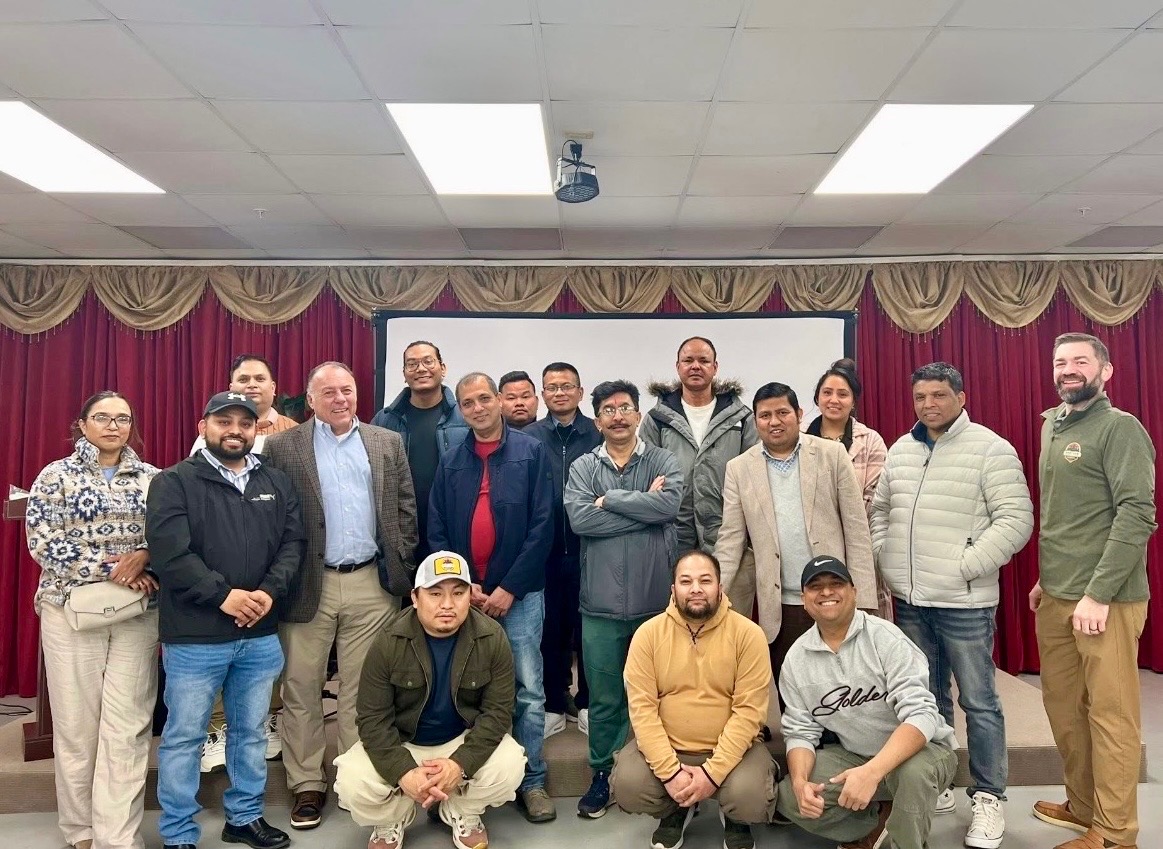
This past week, I had the opportunity to meet with members of the Bhutanese community here in Scranton during a legal clinic. What stood out most wasn’t how different their experiences were—it was how familiar their goals sounded. The questions weren’t political. They were practical. How do I protect my family? How do I build something stable? How do I do this the right way?
After the event, community leader Tek Khadka shared a message that stuck with me. He said, “It was our pleasure to meet you… We really learned lots of things which are helpful in our day-to-day life.”
And that’s really what it’s all about. The law, at its best, should be something that helps people in their everyday lives—not something that feels out of reach or overly complicated.
Because at the end of the day, they’re the same questions I hear from families every day—no matter where they’re from.
Part of that process—regardless of background—is understanding the legal framework of living in the United States. As an attorney, it’s easy to take that knowledge for granted. But every time I meet new people, I’m reminded just how complex our system of laws can be—and how much it matters when someone takes the time to help others navigate it. What may seem routine to me can make a meaningful difference in someone else’s day-to-day life.
Some individuals are citizens by birth, automatically granted full rights under the law. Others become citizens through naturalization, a process that takes time, commitment, and an understanding of our legal system. Many begin as lawful permanent residents—commonly known as green card holders—while others may be here on temporary visas tied to work, education, or travel. Each path is different, but all require an understanding of how the system works in order to build a stable future.
For many Bhutanese-Nepali families, their path followed a structured legal progression: arrival as refugees, adjustment to lawful permanent resident status, and eventually, for many, citizenship through naturalization. It’s a long road—but one rooted in following the law and building stability step by step.
And in many ways, that story isn’t unfamiliar to this region.
Because long before any of us were here, others made that same decision—to leave what they knew in search of something better. The Irish did it. The Italians did it. And so many others followed.
What makes Northeastern Pennsylvania special isn’t that we all come from the same place.
It’s that we all chose to be here.
Over generations, this region has been shaped by wave after wave of people, each bringing something with them—traditions, values, skills, and perspective. And in doing so, they didn’t dilute what existed here. They strengthened it.
The United States didn’t become what it is because of one culture. It became what it is because of many.
In many ways, Northeastern Pennsylvania is a perfect reflection of that idea.
From the Irish who helped build its foundation, to the Italian families who filled it with food and tradition, to the Bhutanese-Nepali families who are now writing the next chapter—this region continues to grow, not in spite of its diversity, but because of it.
This place isn’t built on one story.
It’s built on many—and that’s exactly what makes it strong.