Child Passenger Safety Week: A NEPA Family Checklist
Sep 15 2026 15:30
Child Passenger Safety Week is a timely reminder that the right car seat, booster seat, and seat belt fit can make a life-changing difference. For families across Northeast Pennsylvania, September is a good time to check that every child is riding in the right restraint for their current size, that the seat is installed correctly, and that every caregiver knows the routine before the car starts moving.
At Hart Law, we know parents and caregivers already have a lot to manage. This simple checklist can help families in Dunmore, Scranton, Carbondale, and surrounding communities take a few practical steps to make everyday trips safer.
Why Child Passenger Safety Deserves a Second Look
Car seats and boosters are not “set it and forget it” equipment. Children grow, vehicles change, seats expire, and different adults may transport your child. A seat that worked well last year may no longer be the best fit today.
It is also easy to assume a car seat is installed correctly because it looks secure. But small details matter: the angle of a rear-facing seat, the routing of the belt, the position of the harness, the use of a tether, and the fit of a booster seat’s lap-and-shoulder belt can all affect how well a restraint performs in a crash.
Use Child Passenger Safety Week as a family reset. Check the manufacturer’s instructions for both the car seat and your vehicle, and encourage grandparents, babysitters, and other caregivers to do the same.
Know the Pennsylvania Requirements
Pennsylvania law requires children younger than age 2 to ride rear-facing until they outgrow the car seat manufacturer’s maximum height or weight limit for that position. Children under 4 must be properly restrained in an approved child safety seat, while children ages 4 through 7 must use an appropriate booster seat. Starting at age 8, children must wear a seat belt. Drivers are responsible for making sure children under 18 are properly restrained.
Those are important legal minimums, but a child’s size matters just as much as age. The PennDOT child passenger safety guidance
and the National Highway Traffic Safety Administration’s car-seat resources
recommend following the specific limits and instructions for the seat you own. In general, it is safest to keep a child in each stage of restraint until they outgrow it, rather than moving up simply because of a birthday.
Use This Five-Point Car Seat Check
1. Confirm the right stage.
Is your child still within the rear-facing, forward-facing harness, or booster-seat limits listed by the manufacturer? Rear-facing seats should remain rear-facing until the child reaches the seat’s stated height or weight limit.
2. Check the harness.
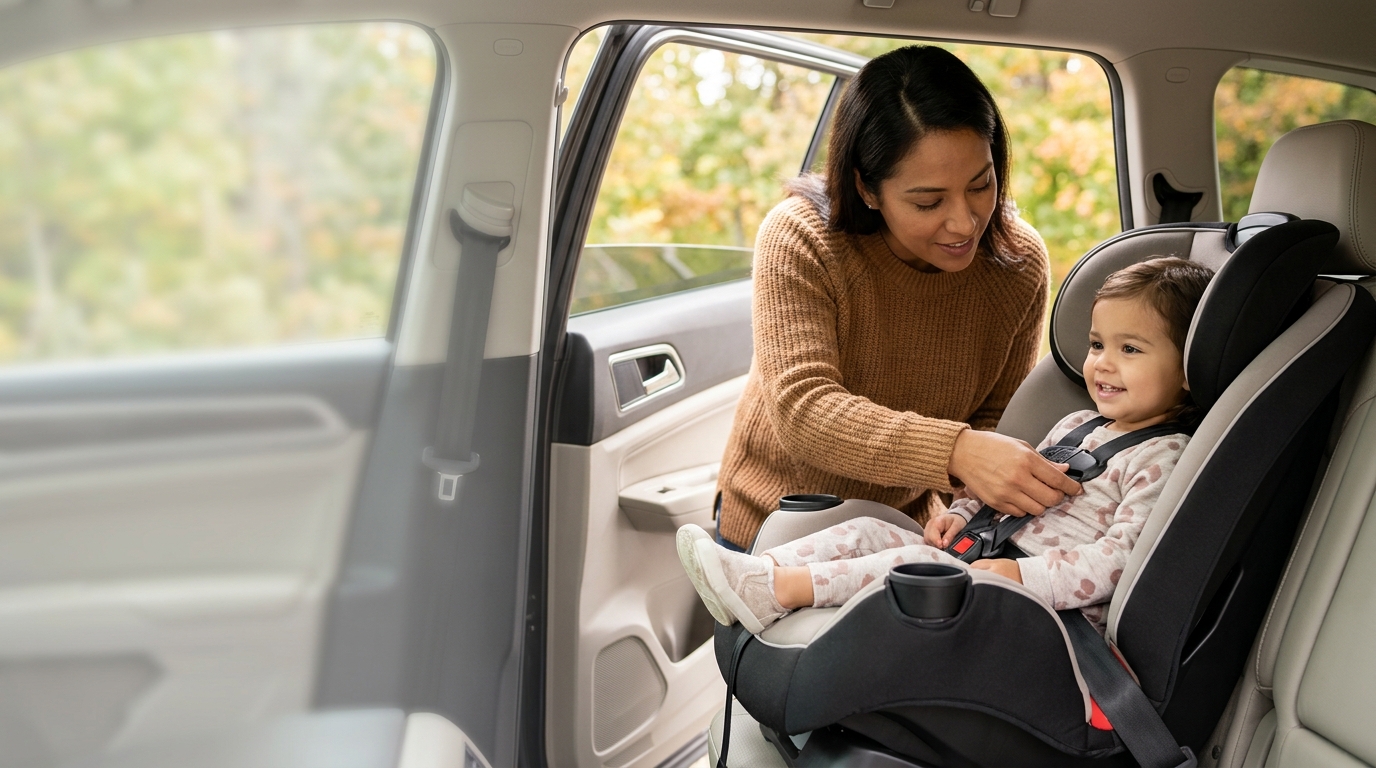
For harnessed seats, the straps should lie flat and snug. Avoid bulky coats underneath the harness, since they can compress in a collision and leave too much slack. Follow the seat manual for the correct harness-slot and chest-clip position.
3. Check the installation.
Read the vehicle owner’s manual and the car seat manual. Use either the seat belt or LATCH system as directed by the manufacturer; do not combine methods unless the instructions specifically permit it. If the seat uses a top tether, make sure it is connected correctly.
4. Check the booster fit.
A booster works with the vehicle’s lap-and-shoulder belt. The lap belt should sit low and snug across the upper thighs, not the stomach. The shoulder belt should cross the center of the chest and shoulder, not the neck or face.
5. Keep kids in the back seat.
The back seat is generally the safest place for children. Never place a rear-facing car seat in front of an active passenger air bag.
Get a Professional Seat Check
You do not have to figure everything out alone. Pennsylvania offers car-seat fitting resources, and certified child passenger safety technicians can inspect a seat and help caregivers understand proper installation and use. A professional check is especially worthwhile when you are installing a seat for the first time, switching vehicles, transitioning to a new type of seat, or preparing for a new baby.
Bring the child, the car seat, and the vehicle to the appointment when possible. That gives the technician the best opportunity to evaluate the whole setup. It is also helpful to bring the seat instructions and vehicle manual, even if you have already reviewed them.
Review Your Plan After a Crash
After any motor-vehicle collision, put health first. Seek medical attention promptly if anyone may be injured, including children who seem okay initially. Some injuries are not obvious at the scene, and a child may not be able to explain what they are feeling.
You should also review your car seat manufacturer’s guidance about whether the seat can be used again after a crash. Do not assume that a seat is safe merely because it has no visible damage. Save relevant documentation, including the crash report, photographs, medical records, insurance correspondence, and purchase information for the child restraint.
If another driver caused the collision, the insurance process can become stressful quickly. Hart Law helps injured people and families understand their options after car, truck, and motorcycle crashes throughout Northeast Pennsylvania. Every situation is different, but getting clear information early can help you protect your family’s interests.
Make Safety Part of Every Ride
Child passenger safety is not limited to long road trips. It matters on the school run, the five-minute drive to practice, a ride home with a relative, and every errand in between. Build a quick verbal routine into the trip: “Everyone buckled?” Make sure backpacks, sports gear, and other loose items are secured, too.
Hart Law is proud to serve practical, hardworking families throughout the Scranton area. Taking time this September to check seats, belts, and installation is a meaningful way to care for the people who matter most.
FAQ
How long should my child stay rear-facing?
Keep your child rear-facing until they reach the maximum rear-facing height or weight limit stated by the car seat manufacturer. Pennsylvania requires rear-facing travel for children younger than 2, but many seats allow children to remain rear-facing longer.
Can my child move to a booster seat at age 4?
Not necessarily. Pennsylvania requires an appropriate booster seat for children ages 4 through 7, but a child should remain in a forward-facing seat with a harness until they outgrow that seat’s harness limits. Check your specific seat’s instructions.
Is it okay to use a car seat after a minor crash?
Consult the seat manufacturer’s post-crash instructions and follow them carefully. The answer can depend on the type and severity of the crash, the condition of the seat, and the manufacturer’s criteria.
Where can I get help installing a car seat in Pennsylvania?
PennDOT and other safety partners offer fitting-station and technician resources. Look for a certified child passenger safety technician and schedule a check that includes your child, vehicle, and seat.
When should I speak with a personal injury lawyer after a crash involving my child?
Consider speaking with an attorney when your child was injured, medical care is ongoing, fault is disputed, or an insurer is pressuring you to settle. Hart Law can explain the next steps in plain English and discuss your options.